Back to overview
Back to overview Back to overview Back to overview
4 Nov

Product Carbon Footprints at Packyard

What are Product Carbon Footprints (PCF)? What does the 'e' in CO2e actually stand for? How can Packyard support making your packaging more sustainable?

Avatar photo Joshua D'Hondt
Pproduct Carbon Footprints (1200 x 700 px) (1)

What is a Product Carbon Footprint?

The demand for sustainability insights is growing, and many of our customers face the challenging task of mapping their total carbon footprint. The environmental footprint of a product, or Product Carbon Footprint (PCF), represents the total greenhouse gas emissions linked to that product.


Because packaging is a critical link in that process, we ensure that we can provide you with the right data to accurately estimate the PCF of your packaging project.

Packyard can now help you calculate your Product Carbon Footprint (PCF)!

What can you expect from our PCF reports?

Although we do not calculate an individual footprint for every single custom project (yes, our work is completely tailored to your project), we can provide you with reliable PCF reports based on our core product groups and materials. Whether you use paper labels, synthetic alternatives, multi-film pouches, or mono- and multilayer materials: we have segmented and aligned the data with your packaging choices.

 
Our PCF reports include both cradle-to-gate and cradle-to-grave footprints. Cradle-to-gate is a standard sustainability term referring to all emissions associated with the production of goods. Cradle-to-grave emissions encompass this production-related output, plus all emissions linked to the end-of-life stage (what happens to the product once it is no longer in use).
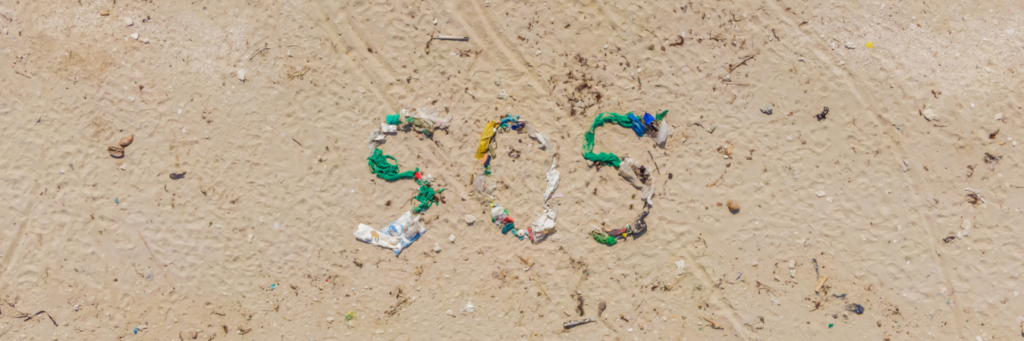
 

Our footprints are based on leading, internationally recognized environmental databases covering tens of thousands of materials and processes. This ensures your reports are backed by verified, robust data you can confidently use for your own sustainability reporting.
Pproduct Carbon Footprints (1200 x 700 px)

What does the 'e' in CO2e stand for?

In our reports, you will come across the term ‘CO2e’. The ‘e’ stands for equivalent. This is because CO2 is not the only greenhouse gas that contributes to global warming. Other gases have an even stronger negative impact than CO2 itself; methane, for instance, has a much greater effect on climate warming.


To interpret and compare the effects of all different greenhouse gases, they are converted into CO2 equivalents. In other words, the CO2e score represents how much CO2 emission would be needed to produce the same climate effect as a specific greenhouse gas (or combination of gases). Therefore, by using the CO2e score, our PCF reports account not only for the impact of CO2, but for the impact of all greenhouse gases combined.

Get started with PCF yourself!
Wondering if your packaging could be “greener”? Our experts can guide you in your search for more sustainable packaging solutions. We also offer comparative reports that showcase the most sustainable options within our product range, enabling you to make well-informed and future-proof choices.


Want to learn more or request a PCF report for your packaging? Get in touch with your regular contact person or send an email to info@packyard.pro.
Avatar photo

Joshua D'Hondt

Joshua has been active with the Packyard group since 2024. As a sustainability coordinator, he specializes in environmental regulations and sustainability management. Within the Packyard group, Joshua is responsible for the ESG & sustainability policy and the monitoring of new legislation. In addition, he serves as the primary contact person for all clients regarding the sustainability of their packaging.